Formado en la Escuela de Bellas Artes de Valencia, desde el inicio de su trayectoria profesional fue un pintor inquieto y preocupado tanto por la necesidad de renovar el arte español como por la función del arte y el artista en la sociedad.
Su firme convicción sobre el arte transformador y comprometido con el entorno, le llevó a formar parte de colectivos muy significativos en el panorama español de posguerra: Los Siete (1949), Parpallós (1956) y Hondo (1960). En este último grupo, que supuso nuevos planteamientos figurativos frente al Informalismo, Genovés desarrolló una pintura de carácter expresionista y provocador.
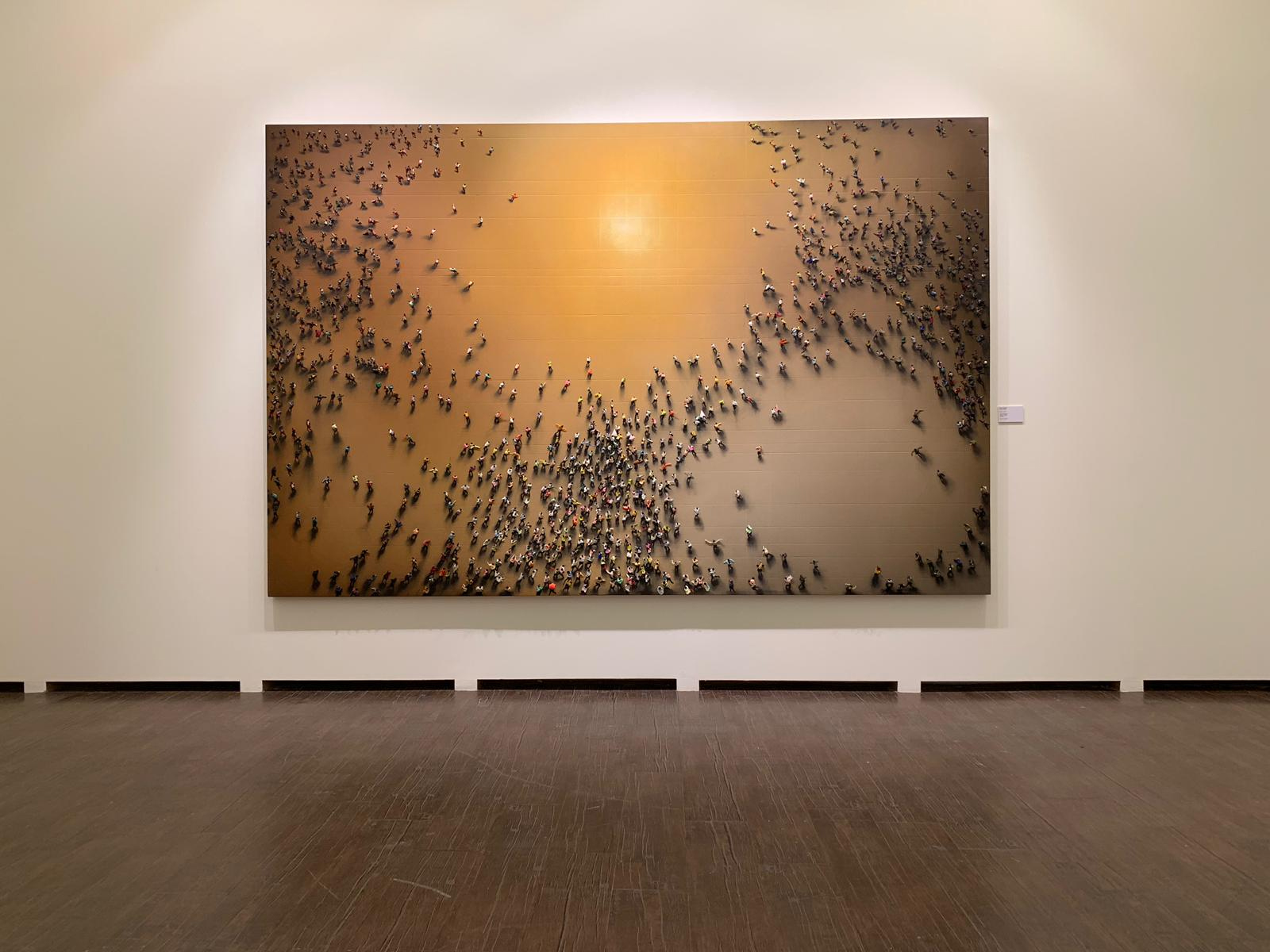
En la década de los sesenta, tras una breve crisis pictórica y una relación profunda con los movimientos de oposición al régimen franquista, comenzó a plantear dos temas: el "individuo solo", resuelto inicialmente como un "collage" en relieve, y la "multitud", tratado con tintas planas y estructuras plásticas de aspecto cinematográfico.
Esta última propuesta se concretará con el tiempo en un singular realismo político de fuerte denuncia social, confeccionado a partir de la manipulación de imágenes proporcionadas por los medios de comunicación de masas. En los años ochenta inició un nuevo periodo en el que se interesó por el paisaje urbano, reduciéndolo a una gama cromática de grises, azules y ocres que constituyen lo que se ha dado en llamar "espacios de la soledad".
Los últimos años su obra ha dado un giro hacia la investigación del movimiento estático en la pintura, la multitud se ha convertido en la referencia para hablar del problema de la pintura y el ritmo visual.
Ha sido galardonado con la Mención de Honor (XXXIII Biennale de Venecia, 1966), la Medalla de Oro (VI Biennale Internazionale de San Marino, 1967), el Premio Marzotto Internazionale (1968), el Premio Nacional de Artes Plósticas (1984), el Premio de las Artes Plásticas de la Generalitat Valenciana (2002) y la Medalla de Oro al Mérito en las Bellas Artes, Ministerio de Cultura (2005).
Trained at the Valencia Art College Genoves was always an inquiring painter, concerned both with the need to renovate Spanish art and also with the function of art and the artist in society.
His firm conviction that art was transforming, and his concern for his environment lead him to join several important movements in the post war Spanish art scene: Los Siete (The Seven) 1949, Parpallós (1956) and Hondo (1960). It was in this last group that presented a new approach to figurative painting opposing Informalism, that Genovés developed a style of painting that was expressionist and provocative.
During the sixties Genoves had a creative crisis which he got over quickly. He became very involved in the opposition movements of the time against the Franco regime. He started to consider two subjects in his painting: the "individual" which he represented through collage and "the crowd" which he painted in flat colours and in a cinematographic style.
The latter style, which developed into political realism with a strong underlying current of social compromise and criticism of the dictatorship, was achieved by the manipulation of images from the media. In the eighties Genoves started a new period in his painting in which he focused on the urban landscape, reducing it to a chromatic range of greys, blues and ochres to make up "spaces of loneliness".
In recent years he has investigated, through his work, the static movement in painting and "the crowd" has become a reference to talk about the problem of painting and visual rhythm.
He has been awarded the Honourable Mention at the XXXIII Venice Biennial in 1966, the Gold Medal at the VI San Marino International Biennial in 1967, the International Marzotto Prize in 1968, the Spanish National Art Prize in 1984, the Valencian Art Prize in 2002, the Gold medal for merit in the Arts by the Spanish Culture Department in 2005.